By:Dana Gentry-March 11, 2026 4:55 am
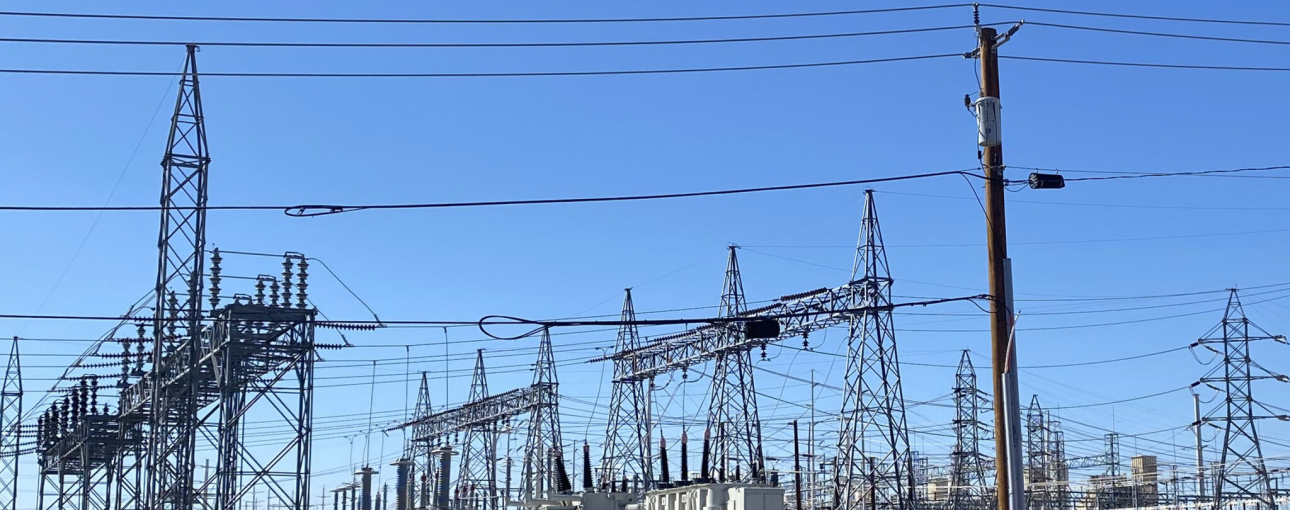
A long-time Nevada utility expert and federal regulator thinks an unusual proposal to change to how power bills are calculated in the state could be a sleeper issue that electrifies the Nevada race for governor. (Photo: NV Energy’s Clark Generating Station in Henderson; Hugh Jackson/Nevada Current)
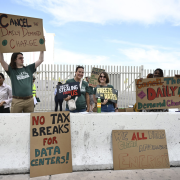
Community and energy industry advocates are calling on Republican Gov. Joe Lombardo to halt NV Energy’s controversial peak demand charge that is expected to increase some bills by $20 a month and is set to take effect in Southern Nevada on April 1.
Lombardo’s reaction, as well as his opponents’, to calls to intervene could help determine the outcome of the gubernatorial election in November, suggests longtime Nevadan Jon Wellinghoff, who has deep roots in the energy industry. Wellinghoff has served as Nevada’s Consumer Advocate and as a chairman of the Federal Energy Regulatory Commission.
Wellinghoff calls NV Energy’s effort to impose the peak demand charge “not only one of the most important ratepayer stories in the country, but for Nevada, one of the most significant political stories ever.”
The charge will be based on a customer’s highest 15-minute period of energy consumption each day. It is unprecedented among investor-owned utilities in the U.S. and comes as NV Energy recovers from a public relations nightmare – an acknowledgement that it overcharged customers more than $65 million over two decades, followed by a series of corporate contortions to avoid full repayments.
“April Fool’s Day is when the new charge goes into place. People are going to go crazy when this happens,” suggests Wellinghoff. “By June 1, I think people will have pitchforks before the Public Utilities Commission and NV Energy.”
“As we’ve seen in other states, like New Jersey, governors have the power to freeze rates and stand with the people for energy affordability,” Jackie Spicer of the Nevada Environmental Justice Coalition, a group of community and faith-based organizations urging Lombardo to take action, said in a news release last week.
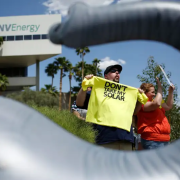
In a separate action, the Alliance for Solar Choice, a coalition of industry advocates, is asking Nevadans to sign a petition asking Lombardo to derail the demand charge until state lawmakers can have a say in 2027.
NV Energy contends the change in the way bills are calculated is necessary to offset what it says is a $50 million annual subsidy paid by full-service ratepayers on behalf of solar customers.
“The people have had it with NV Energy,” says Angel DeFazio, a fervent critic of the utility and the PUC. “But if Lombardo interferes, the Commission, in my opinion, is no longer independent. It would be an admission that his appointees favor utilities.”
Lombardo appointed the three PUC members who approved NV Energy’s application to impose the peak demand charge.
Attorney General Aaron Ford, a Democrat who is hoping to unseat Lombardo in November, could emerge as a hero to ratepayers, says Wellinghoff. His Bureau of Consumer Protection is asking Clark County District Judge Mary Kay Holthus to throw out the peak demand charge, based in part on a Nevada law that prohibits rates based on time of day.
“Aaron Ford could turn around what is an eight-to-one campaign monetary advantage here very quickly by simply taking advantage of this,” says Wellinghoff.
Ford reported $1.5 million in cash on hand in January, compared with Lombardo, who reported $9 million.
Of all Republican governors up for reelection in 2026, Lombardo is the most vulnerable, according to the Cook Political Report, which ranks the Nevada race as a toss-up.
California Democratic gubernatorial hopeful Tom Steyer “is on the TV every other hour talking about doing away with PG&E in Southern California,” says Wellinghoff. “‘I’m running for governor. Vote for me. I’ll municipalize these things and we’ll lower our rates.’ Where are the people in Nevada talking about the same thing?”
“I’m suing to stop this demand charge, while Joe Lombardo is sitting on the sidelines and making life more expensive,” Ford told the Current, adding that “Lombardo should use every tool available to him to lower costs for Nevada families.”
Wellinghoff says Ford would be wise to consult the playbook that helped buoy another Democratic AG to victory more than 40 years ago.
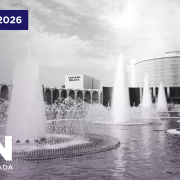
In 1982. Nevada Power, which changed its name to NV Energy in 2008, had just erected a gleaming edifice on West Sahara.
Then-Attorney General Richard Bryan, a savvy Democrat known for having his finger on the pulse of the electorate, was running for governor against Republican incumbent Gov. Robert List. Bryan deemed Nevada Power’s building a monument to corporate greed and suggested ratepayers honk as they drove by.
Las Vegans, who were up in arms over the cost of electricity, made signs that said “Honk if you hate Nevada Power.”
Bryan became governor with an 11% win over List.
“It was the last time a Democratic candidate for governor defeated a Republican incumbent in Nevada,” Wellinghoff notes.
Coincidentally, NV Energy is once again moving its headquarters – this time to a $28 million office building in Summerlin.
In February, Holthus rejected a motion filed by the utility and the Public Utilities Commission to consolidate the Bureau of Consumer Protection’s case with another filed in Carson City. Wellinghoff says the judge’s decision “signals to me she’s looking very seriously at what the plaintiffs are saying here.”
Holthus’ timing could be critical to Ford’s campaign, says Wellinghoff.
“If the judge overturns this before or shortly after April 1, she could dampen the political impact,” says Wellinghoff, noting it’s still a win for Ford’s Bureau of Consumer Protection. “But I think from a political perspective, it would be better for Ford if she doesn’t have time to rule, doesn’t rule, or in essence, rules against him. Then he can say ‘we’re taking this to the Nevada Supreme Court,’ which, of course, won’t happen before the election. I think he would have more political momentum if people are still having to pay these ridiculous bills all through the summer while he’s campaigning.”
Ford, he says, can use the court’s ruling to his advantage either way. “This is an election-winning issue, because people are going to go nuts.”
Lombardo, faced with an electorate struggling to pay its power bills, likely has few options, says Wellinghoff. “He is just going to stew in the fact that his Public Utilities Commission made this decision.”
The governor’s office declined to respond to questions and directed the Current to the PUC to learn “more information about the demand charge.”