
NEVADA ENVIRONMENTAL JUSTICE COALITION
Learn more about Our Work
Affordable Housing & Utilities
The best protection from extreme weather is safe housing. As families grapple with the rising cost of living, the combination of unaffordable energy bills and inadequate housing infrastructure leaves many Nevadans vulnerable.
Record heat in the summer means residents also face increased health risks. The climate crisis will worsen these compounding issues and leave frontline communities at risk. Ensuring our communities have access to affordable, reliable, and clean energy is critical to the safety and wellbeing of Nevadans.
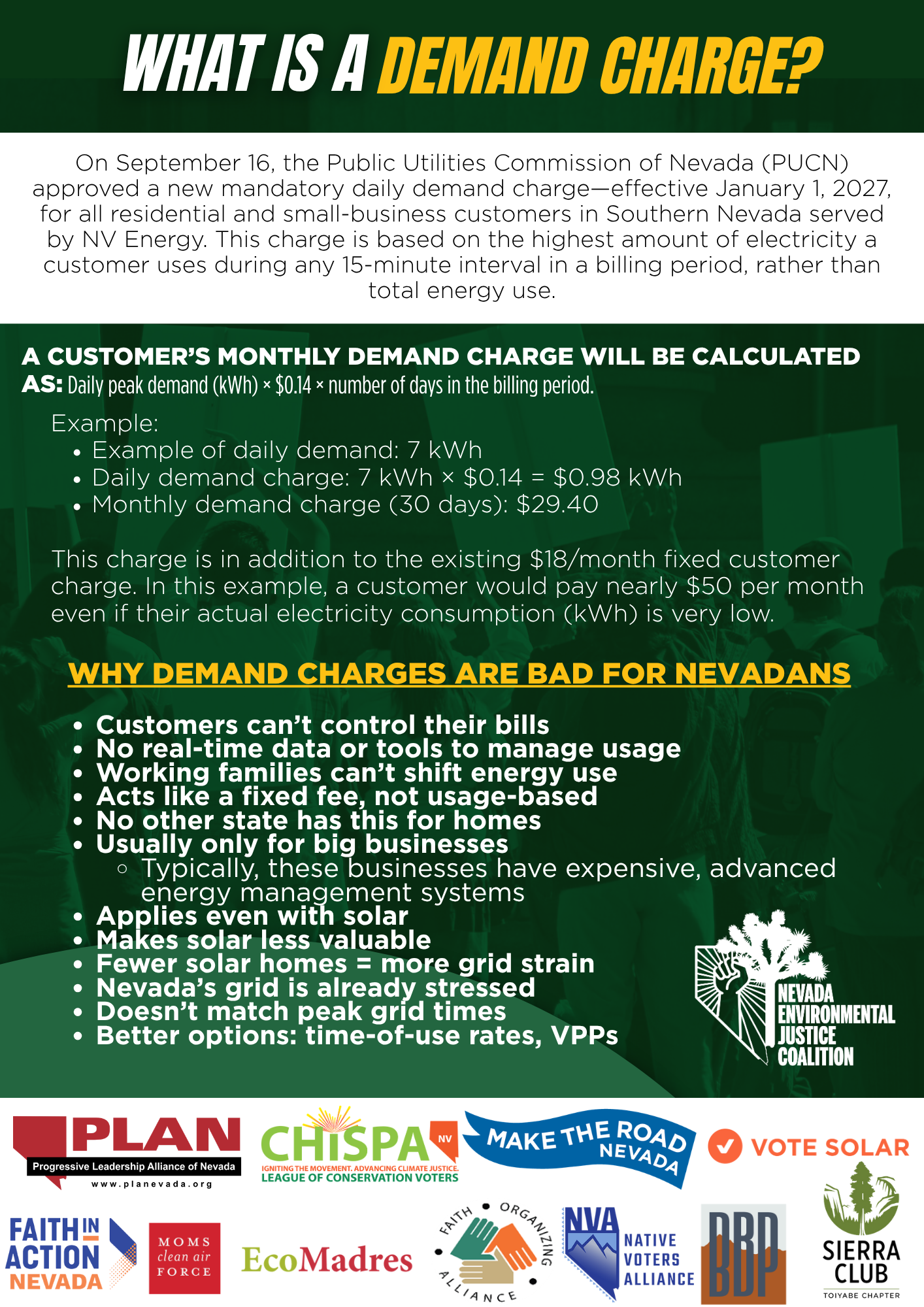
NV Energy’s new daily demand charge needs to be canceled completely, not postposed for a later date. Working families do not have the flexibility to spread out their power usage throughout the day, and it is wrong for our investor-owned electric utility company to make a profit off our neighbors with the highest energy burdens.
Transportation
Transportation is the largest contributor to greenhouse gas emissions in Nevada, making it a central issue in the fight against climate change. Expanding access to reliable public transit can help reduce emissions from personal vehicle use and mitigate the worsening impacts of heat, drought, and air quality degradation.
How we travel affects health outcomes, particularly in Las Vegas neighborhoods like the Eastside, Westside, Downtown, and areas surrounding the Strip, which are at higher risk for respiratory illnesses such as asthma.
More cars on the road lead to more traffic and emissions, exacerbating these health risks. Access to safe and dependable public transportation is crucial for the sustainable growth of our communities.
Water
As the driest state in the nation, Nevada faces an escalating water crisis. Despite ongoing conservation efforts, outdated water laws allocate more water on paper than is available in nature. This imbalance, coupled with climate change, fuels concerns that vast areas of the state could become uninhabitable. In extreme heat, water is a life saving resource that is not always accessible or affordable for residents. This issue is critical not just for the current residents of Nevada but for future generations who will inherit the consequences of today’s environmental stewardship.
Many parts of our state are combating the loss of groundwater and minimal surface water availability, as well as pollution from mining projects. Access to clean, safe, and reliable drinking water should be a right for all Nevadans- regardless of whether we live in urban or rural areas.
Extreme Heat
Extreme weather events are becoming more frequent, more severe, and lasting longer as a direct result of climate change and the rise in greenhouse gases. Extreme heat kills more people than hurricanes, floods, and tornadoes combined each year making it the deadliest natural disaster in the nation.
Reno and Las Vegas are the two fastest-warming cities in the US. Nevada’s extreme heat hits marginalized communities like BIPOC the hardest, exacerbating inequities due to soaring utility bills, malfunctioning air conditioning, and lack of adequate heat protection measures. These conditions are not just uncomfortable but are increasingly becoming a matter of survival.
Research shows that extreme heat disproportionately impacts communities of color. Despite the fact that heat-related deaths and illness are preventable, heat is still the leading weather-related cause of mortalities in the U.S.
Nevadans need protections to stay safe from this invisible threat. The Nevada Environmental Justice Coalition is working with partners at all levels of government and labor unions to advocate for worker protections from extreme heat and wildfire smoke.
NEVADA ENVIRONMENTAL JUSTICE COALITION
Learn more about Victories
AB96 (2025)Extreme Heat Mitigation Planning:
Requires local governments to adopt heat mitigation strategies in their master plans, such as establishing cooling centers, increasing shaded areas, providing drinking water stations, and expanding urban tree canopies. Fewer heat-related health emergencies improve public well-being, creating stronger, healthier communities for all. Shaded streets stay cooler and need fewer repairs, saving local governments money on infrastructure maintenance.
SB260 (2025)Outdoor Worker Protections from Wildfire Smoke:
Directs the Nevada Division on Industrial Relations to develop regulations for how employers will protect outdoor workers when Air Quality Index levels exceed 150, as well as determining when employers will cease outdoor operations to protect the safety and wellbeing of workers.
NEVADA ENVIRONMENTAL JUSTICE COALITION
Learn more about Past Work
SB 431 – 2025 Reforming Live Entertainment Tax to Fund Public Transportation (Died on Sine Die): SB 431 sought to reform Live Entertainment Tax (LET) to include resale tickets and will designate one-ninth of all Live Entertainment Tax revenue to the Regional Transportation Commission of Southern Nevada to support the operation and maintenance of a public transit system. Improved public transportation will enhance safety, reliability, shorten commute times, and broaden access to employment, increasing the available workforce while reducing employee tardiness and absences. Expanded public transportation options will also reduce the dependence on personal vehicles, which in turn can reduce traffic congestion and carbon emissions.
SB 427 in 2023 (Failed to Meet Committee Deadlines): Known as the Outdoor Workers Protection Bill, would have established parameters to protect workers from the effects of extreme heat and unsatisfactory air quality in the workplace. The death of this bill brings concerns that if we don’t work quickly in future legislations we risk the health of many workers in Nevada.
In 2024, Nevada OSHA published Nevada’s first Heat Illness Regulations. These regulations require employers to include heat protections for employees in their workplace safety plans. Employees should report any employers who do not create a safe working environment during extreme heat to NV OSHA.
AB 312 in 2023 (Failed to Meet Committee Deadlines): This bill sought to create an Environmental Justice Advisory Council where community members could voice their concerns related to Environmental Justice and the Council would advise the Legislation to address these concerns.
Signed by Governor The newly enacted Windsor Park Environmental Justice Act establishes a program for the relocation of the Windsor Park residents, a neighborhood of the City of North Las Vegas whose homes have been affected by the sinking of the ground beneath their residences. The act will give the affected residents a chance to exchange their damaged homes for a newly constructed residence adjacent to Windsor Park through a program of the Housing Division.
Windsor Park is a historically Black community built over geological faults and an aquifer in North Las Vegas in the 1960s. As groundwater was pumped from the aquifer, Windsor Park’s houses began to sink, crack, and break. For years the community has sought justice and solutions with city, state, and federal officials with the help of Senator Dina Neal.
AB 131 This bill revises provisions governing urban and community forestry in Nevada.
Working with legislators to create change in Nevada
- Educating lawmakers on the issues
- Environmental justice advocacy days
- Civic engagement trainings for community members
- Winning on issues that protect people & the planet