by Tiffany LaneMon, July 6, 2026 at 7:04 PM
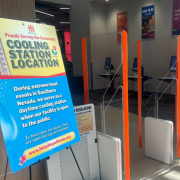
LAS VEGAS (KSNV) — The Vegas Valley was experiencing extreme heat on Monday, leading Clark County to activate its cooling stations around town.
While these temperatures are nothing new for the community, the potential health risks are concerning.
In 2024, there were 513 heat-related deaths in Clark County.
In 2025, there were 296, a significant decrease.
But still leaving concerns for advocates.
“So over the past 150 so years, Las Vegas is one of those cities that’s the fastest warming in America,” said Ben Leffel, an assistant professor of public policy at UNLV.
He says Las Vegas is on pace to reach devastating temperatures.
120 is the hottest temperature ever recorded in Las Vegas, and it happened on July 7th of 2024.
“Human flesh begins to burn at 125 air temperature,” said Leffel. “We’re rapidly approaching that, so it’s going to be dangerous to go outside.”
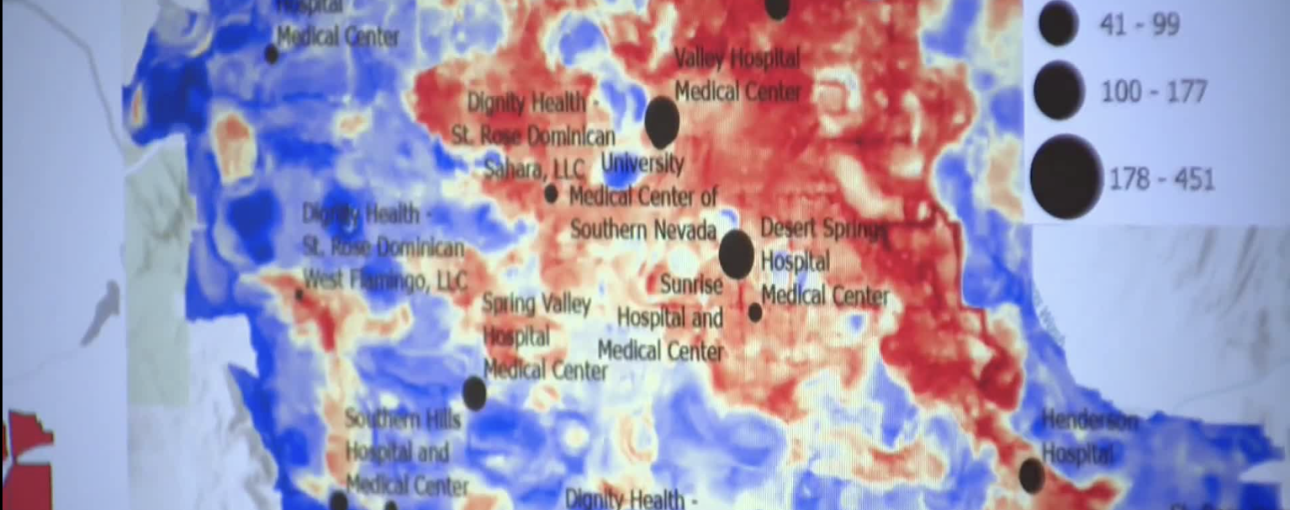
Southern Nevada has several locations called urban heat islands- areas like East Las Vegas and north of the city, for example.
A heat island is where there are concentrations of buildings and concrete structures, where they may have fewer trees and other vegetation to help cool things down.
And it creates an area where there are higher-than-average temperatures.
“That can have greater health risks for people who are exposed to higher temperatures; people can be paying higher energy bills,” said Jackie Spicer, coordinator of the Nevada Environmental Justice Coalition. “If they are folks who live in older homes, they have to use their ACs more to combat that.”
Spicer says a new law in Nevada that took effect on July 1st is a strong first step in addressing heat mitigation as a whole. Her coalition spoke in favor of the bill in the 2025 legislative session.
“Yes, so there is a requirement that the jurisdictions are expanding access to public drinking water, that they are expanding access to cooling spaces, like cooling centers, that they are encouraging cool building practices, things like built shade, and also tree canopies,” said Spicer.
The law that took effect on July 1st requires jurisdictions like Clark County and the cities of Las Vegas, Henderson, and North Las Vegas, among other cities will need to come up with a plan to reduce the heat impacts.
Many of the jurisdictions already have some of the steps in place, including cooling centers and free tree planting programs for residents.
“Our communities also need funding. Actually, our whole state needs funding to back up our priorities for protecting people from extreme heat,” said Spicer.
Leffel, who also spoke in support of the bill and provided a presentation to the legislature, says it’s also important to look at what other cities with similar heat issues are doing to find additional solutions.
“If you pave paradise, you pave the toll,” said Leffel. “Cities around the world are figuring out that where there’s more asphalt and where there’s more car dependence, there’s more risk of heat and heat-related illnesses.”
At the end of the day, both Leffel and Spicer say accountability will play a huge factor moving forward.
“We cannot be okay with the status quo of having unfunded cooling centers that do not operate 24 hours a day, especially when we’re seeing a lot of hotter overnight temperatures in the valley; we also need to be ensuring that cooling centers have medical staff who is trained and paid to actually respond and help people,” said Spicer.
In regard to the new heat law, the city of Las Vegas said in a statement in part: “The city has long been a leader in sustainability, including heat mitigation. This is already part of the 2050 Master Plan (section 2 starting on page 168) that was adopted by the City Council back in 2021. Part of this plan includes planting 60,000 new trees by 2050. In fact, residents in certain zip codes can apply to have a free tree planted at their house.”
The Legislature is requiring some additional caveats specifically on heat mitigation that are going through the city’s general plan amendment process. These have been approved by the Planning Commission and will be before the City Council for approval on July 15.
A North Las Vegas spokesperson said in a statement in part: “The North Las Vegas City Council adopted an amendment to our Comprehensive Master Plan to add a heat mitigation plan at its meeting on June 17, 2026. The amendment defines a goal for heat resiliency and supporting policies that focus on practical strategies and specific actions that reduce heat exposure, improve public health, and integrate heat risk into long-term planning.”
And a Henderson spokesperson said in a statement in part: “The City of Henderson remains committed to protecting our residents from extreme heat and strengthening longterm community resilience. Our existing Henderson Strong Comprehensive Plan already includes some of the region’s strongest policies addressing the urban heat island effect, with guidance on cool building practices, expanded shade and heatmitigation design standards. We continue to expand one of Southern Nevada’s highest tree canopy levels through ongoing partnerships and community shade initiatives. In alignment with AB96, we are currently updating the entire plan and will incorporate additional heat-related requirements, including public cooling spaces and expanded drinkingwater access.”
The statement further said that “the City continues to take action to keep Henderson residents safe and resilient by operating a cooling station at the Downtown Senior Center and expanding homeless outreach during extreme heat events. The Office of Public Response, Animal Protection Services, and Salvation Army are all equipped with water and other heat mitigation resources. They are patrolling throughout the week and are an additional resource.”